A pear nearly as commanding as a person. A glossy apple blown up beyond recognition. An enormous egg covered in a mottled glaze. Hans Hedberg ceramics took the most familiar forms and made them impossible to ignore.
Born in Sweden in 1917, Hedberg originally trained as a painter, studying in Stockholm, Copenhagen, and Paris. His direction changed after a trip to Capri in 1947 sparked an interest in pottery. He went on to study ceramics in Faenza, Italy, before settling in Biot in the South of France, where he established his studio and kiln in 1949.
There, Hedberg found himself in extraordinary company. Pablo Picasso was experimenting with ceramics nearby in Vallauris, while artists including Fernand Léger and Jean Cocteau visited Hedberg’s studio. He also helped Marc Chagall learn the medium.

How Hans Hedberg Ceramics Became Larger Than Life
By the 1970s, fruit had become one of Hedberg’s signatures. Apples, pears, pumpkins, plums, grapes, and cherries were enlarged into surreal sculptures, alongside the egg forms he had explored earlier in his career. The appeal was not only their scale. Hedberg developed his own glazes and enamels, creating richly speckled surfaces that made ceramic imitate skin, shell, and ripening fruit. The Nationalmuseum in Stockholm notes that these custom glazes were essential to the illusion. National Museum Collection
His work could be playful, but it was never simply decorative. By changing scale, Hedberg transformed something ordinary into something strange. A pear stopped belonging in a fruit bowl and began demanding the space of a sculpture.
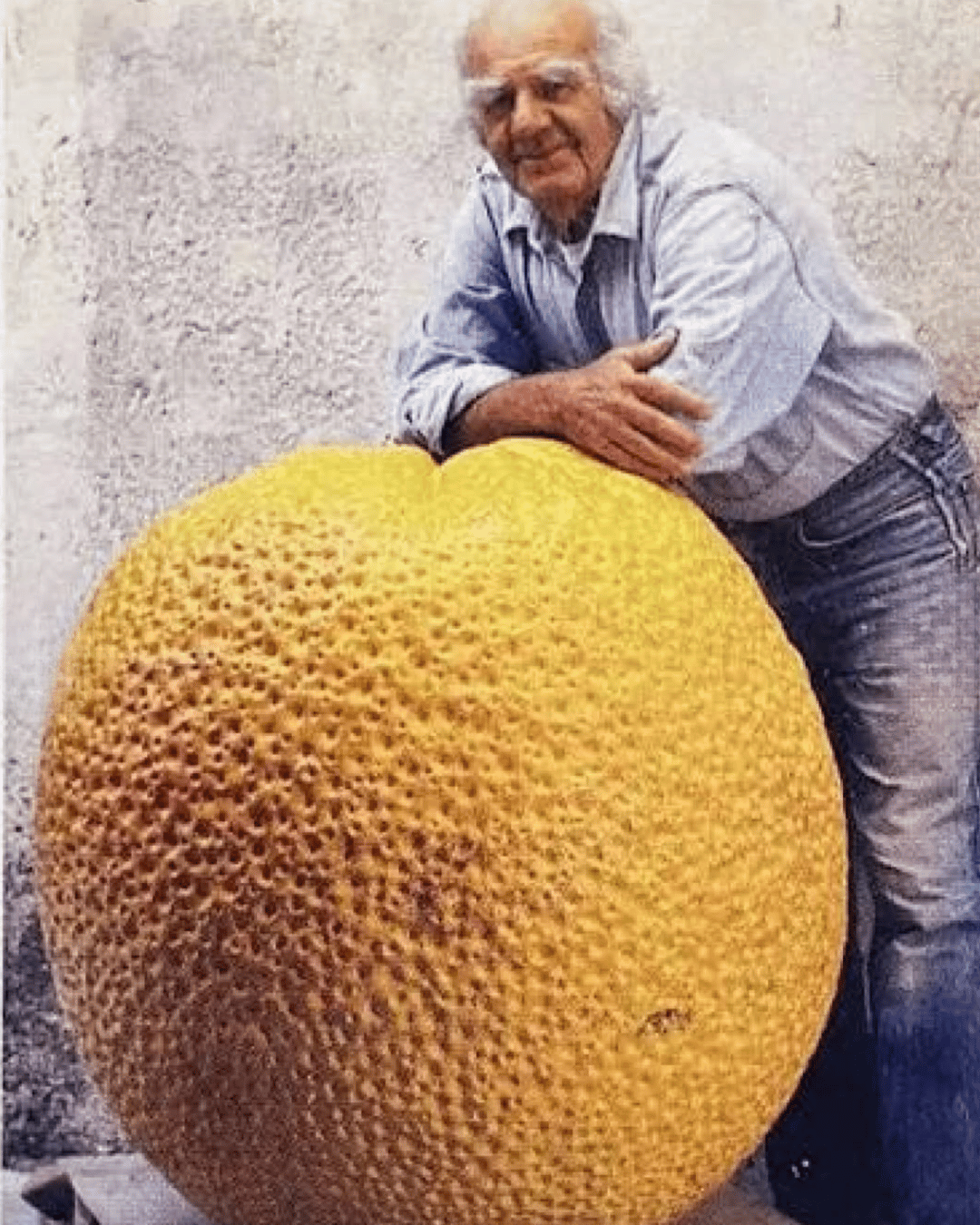
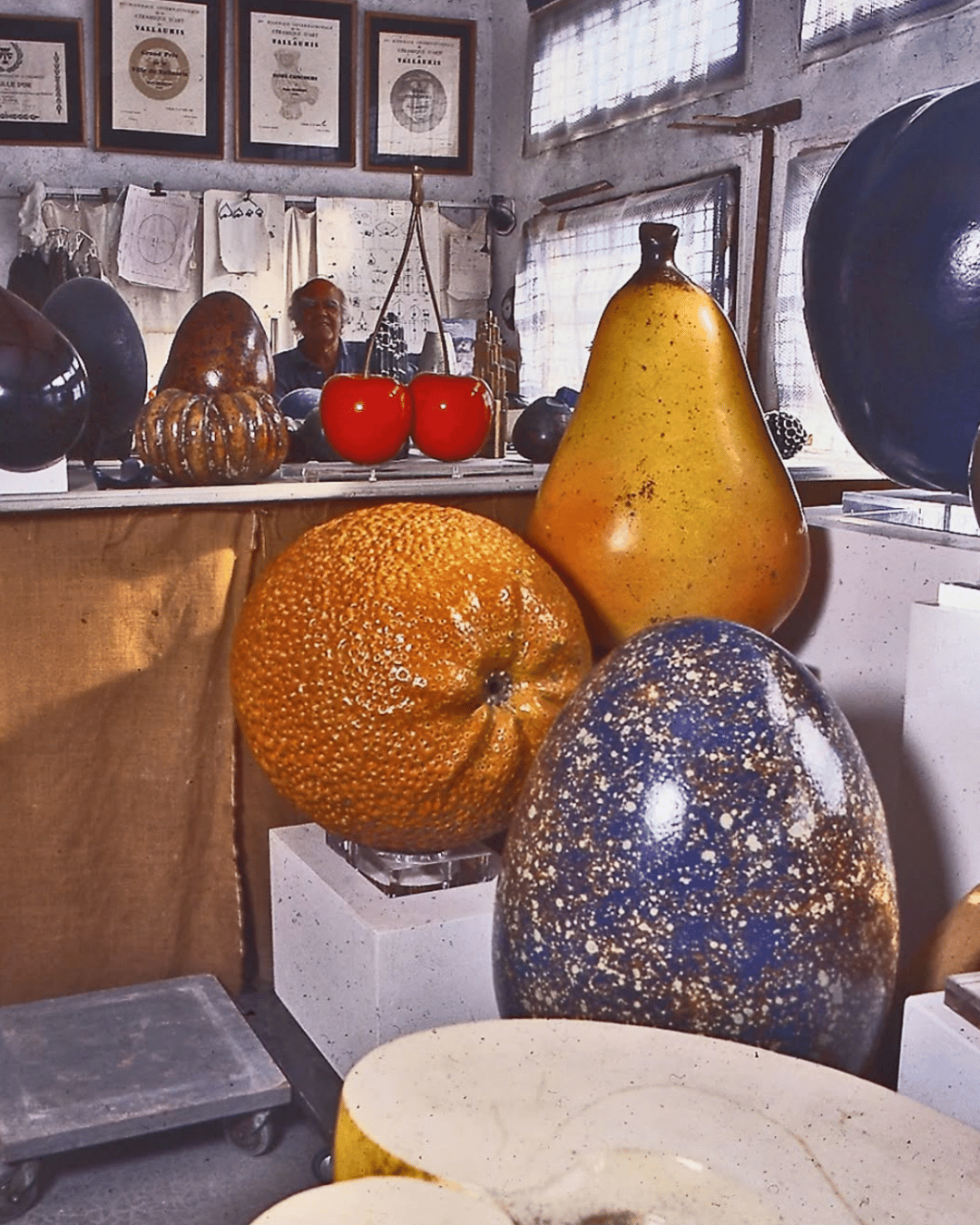

An ordinary fruit became sculpture. Something familiar enough to sit in your kitchen suddenly demanded the space and attention usually reserved for a monument.
Decades later, the pieces still feel playful, strange, and surprisingly contemporary.
Proof that sometimes all it takes to make us look again is making the everyday enormous.